
Diverse Belonging exhibition runs from 20 March to 7 April
Disability Innovation Institute UNSW, (DIIU) is partnering with Creative Communities and the Health Translation Hub (HTH) to present Diverse Belonging, a free pop-up exhibition of competition artwork by UNSW students.
Diverse Belonging was founded on a desire to incorporate creative practices into the work of the DIIU. The aim was to show the value of artistic expression and the impact it can have on both the artist and the wider UNSW community. 2026 was the first year DIIU hosted an art competition, and the response from students was incredibly strong.
With the 2026 competition's theme focused on imagining a future where diverse belonging is actively created and sustained, there were many high-quality submissions across several different mediums, including paintings, photography, digital designs, and sketches. All competition entries are available to view below, with the winning works to be displayed at the Diverse Belonging exhibition.
Exhibition launch event: Friday 20 March at 3.30pm, Health Translation Hub
[Image: Emily Crockford Spunky Bush Trees 2017, Studio A]
Exhibited artworks
The three winning submissions and the People's Choice Award winner (as voted by students) will be included in the exhibition:
- Felix Smith - Again, Everything's Eventually Great;
- Aaron Saint-James - Fragments of Belonging: Marginalisation = Segregation;
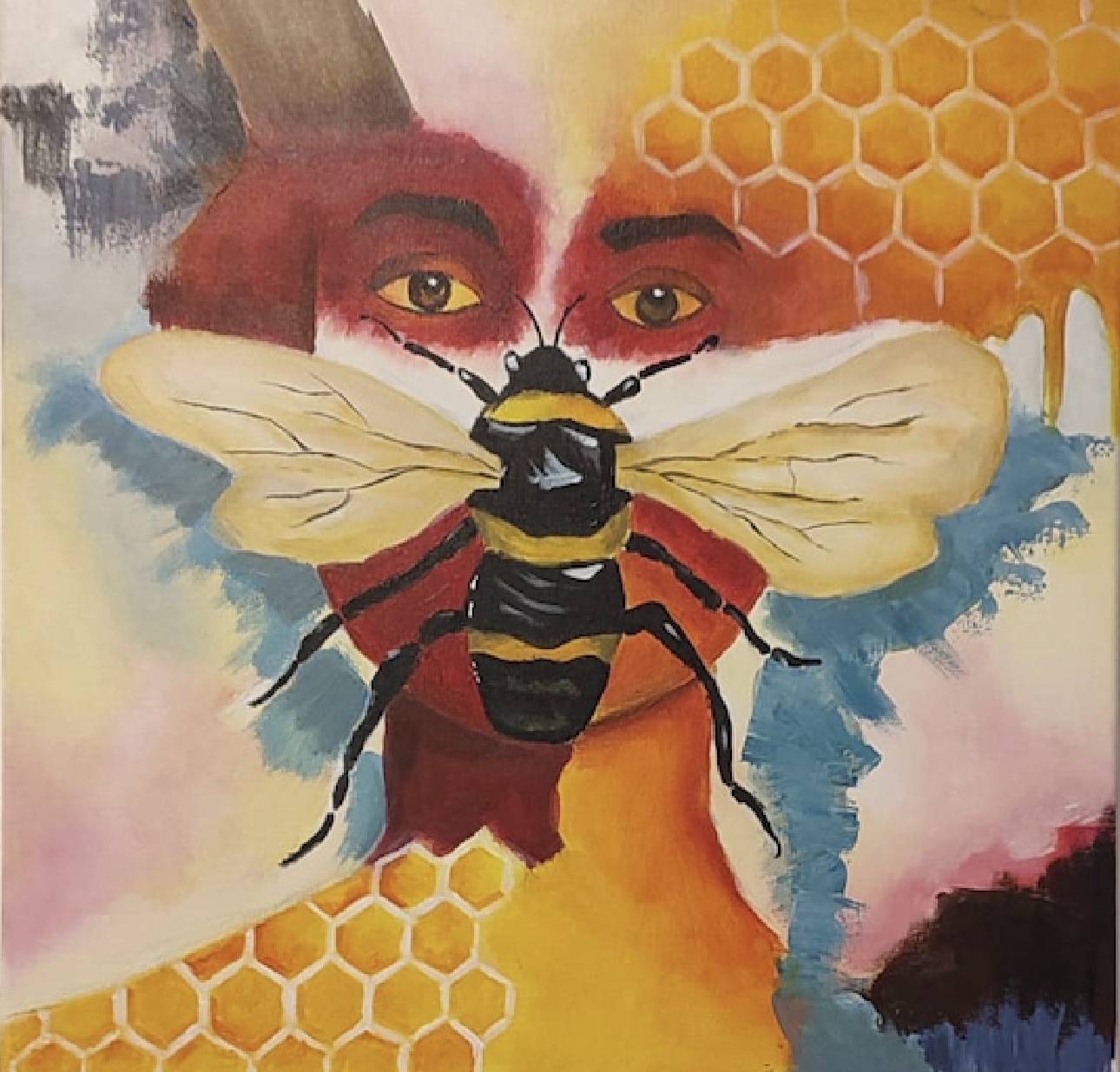
- Ishaan Kapoor - The Hive Within; and
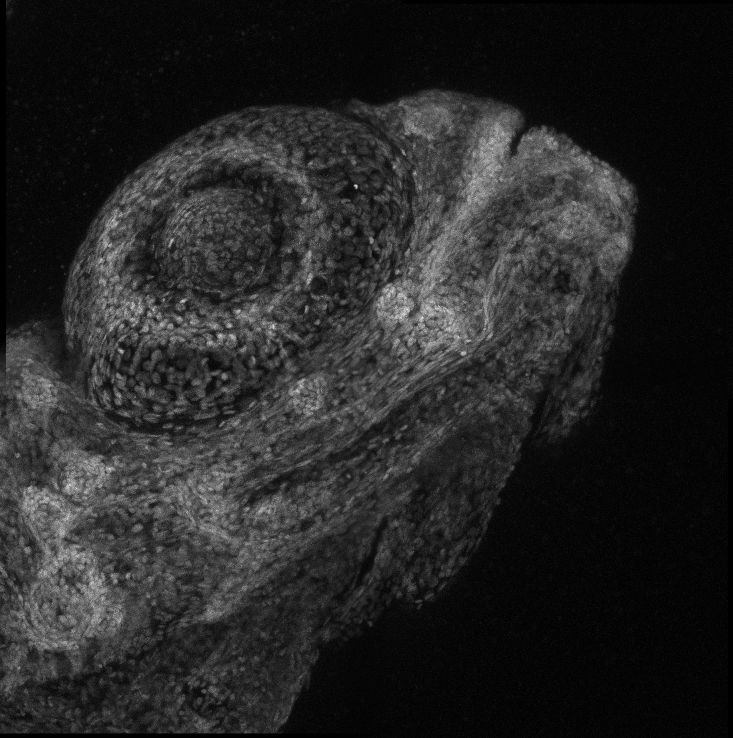
- Aiko Simanjaya - Blue Ribbon Vision (People's Choice Award winner).
For the opening event on Friday, 20 March, Diverse Belonging will also be showing the three Highly Commended works:
- Ma Chengcheng - Access Code;
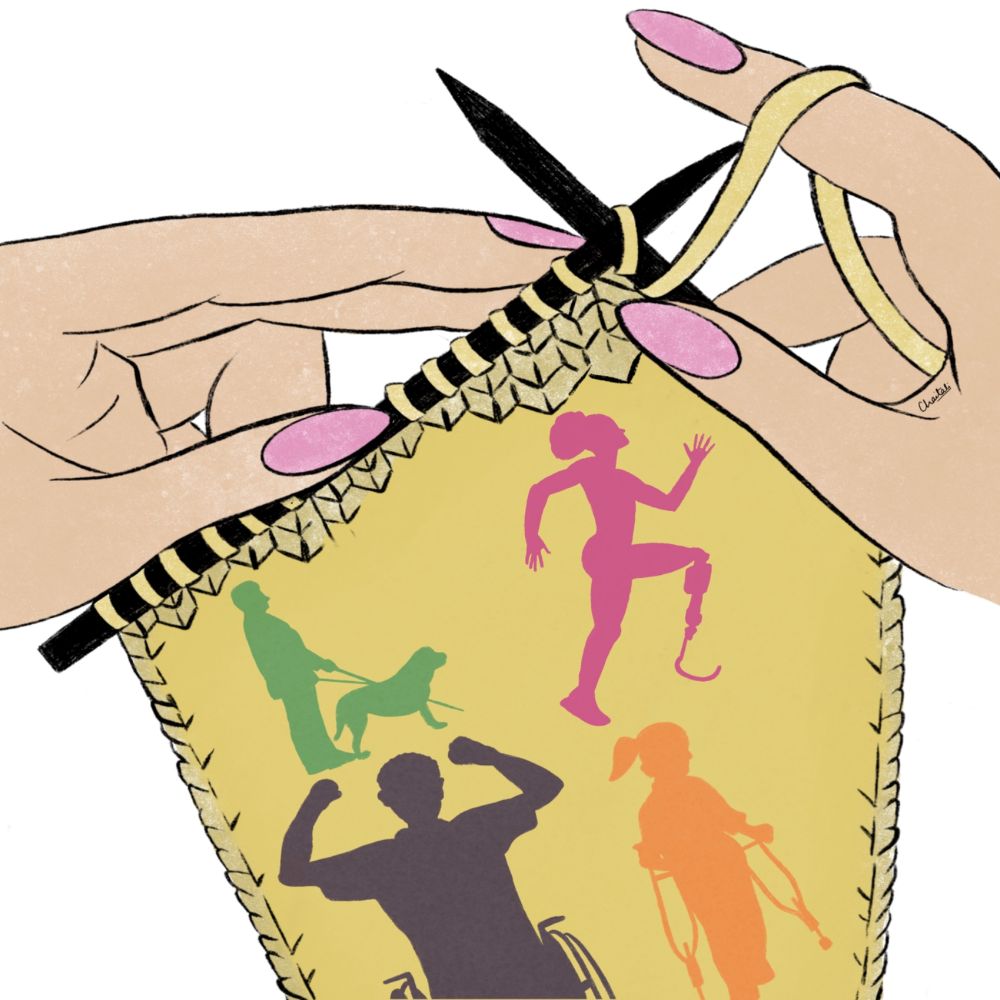
- Chaitali Gupta - Knitting inclusion; and
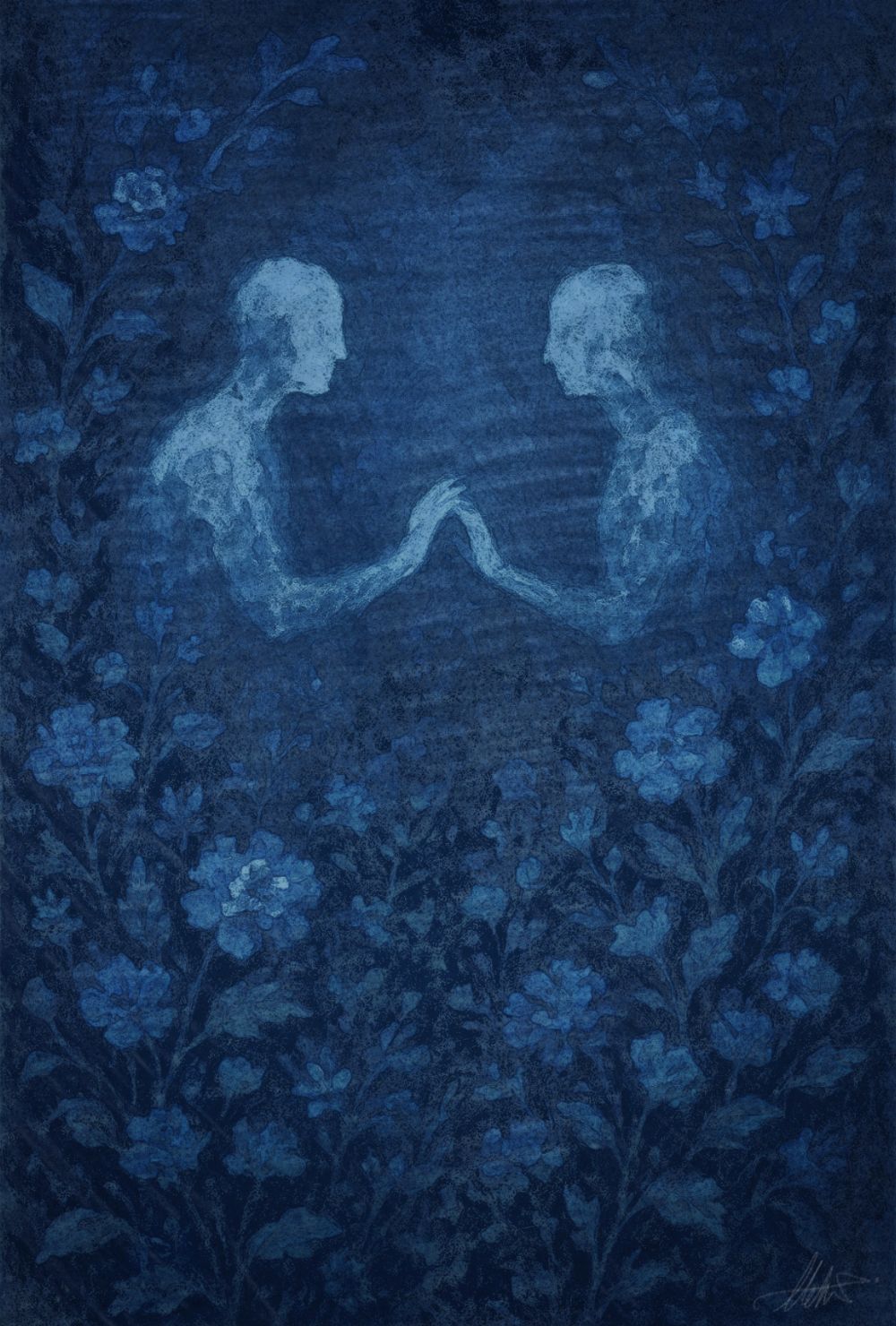
- Britney Heng - Between the Blues.
This competition is part of UNSW’s Progress for All strategy, which commits to building a university where equity, accessibility, and inclusion are central to learning, research, and community engagement. Through art, we invite students to express how these values shape their campus lives today, and how they might transform institutions and societies tomorrow.
~~~~~~~~~~~~~~~~~~~~~~~~~~~~~~~~~~~~~~
Congratulations to our winners, selected through an adjudication panel including experts in art, and in disability inclusion. These works were selected as the best examples of the theme of Diverse Belonging, telling a strong story of lived experience in an expressive and impactful way.
The winners
Felix Smith: Again, Everything's Eventually Great
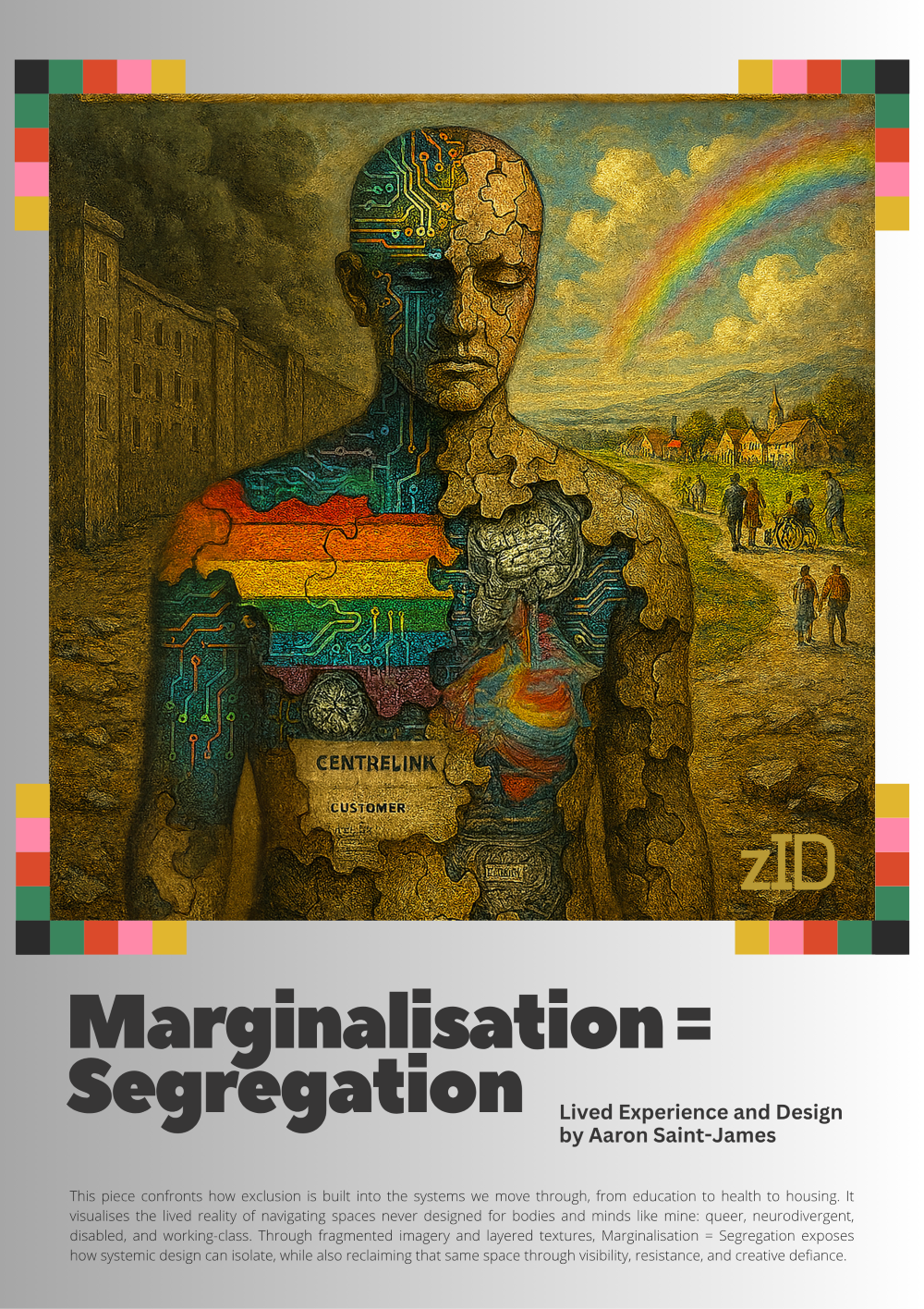
Aaron Saint-James: Fragments of Belonging: Marginalisation = Segregation

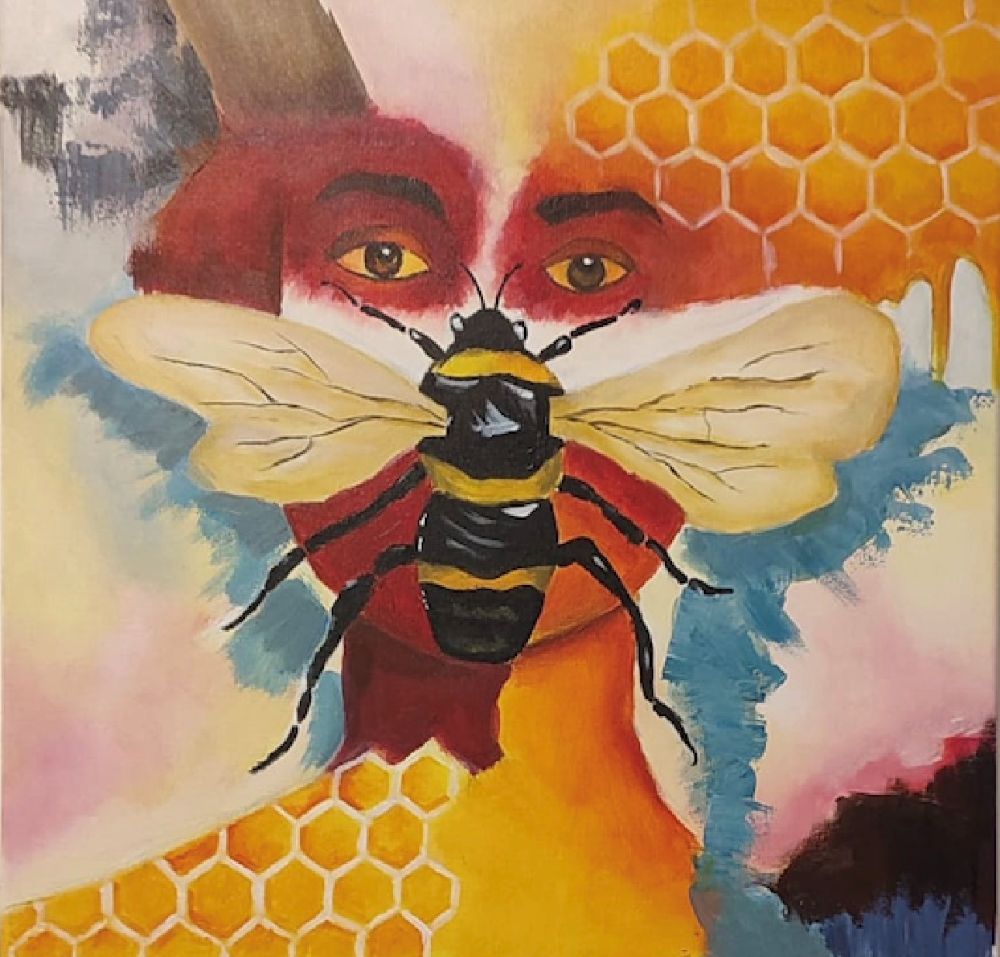
Ishaan Kapoor: The Hive Within
Highly Commended
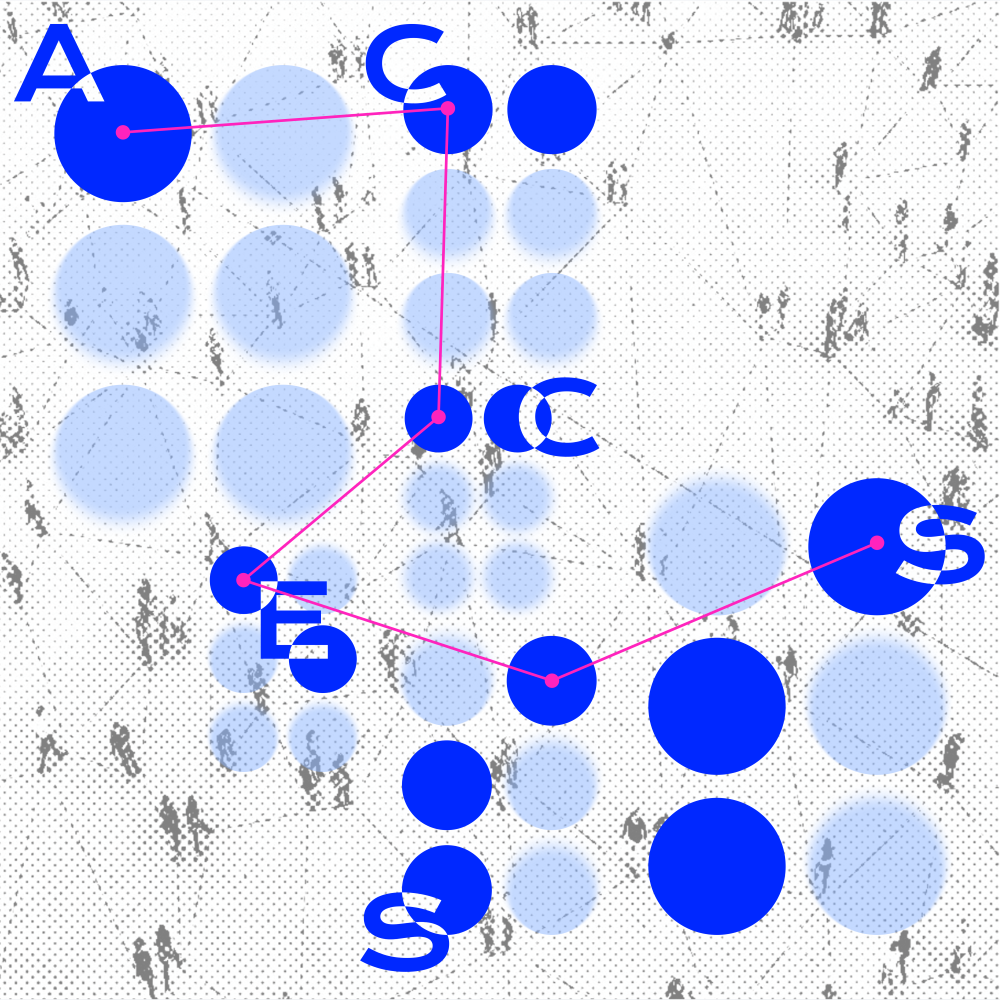
Ma Chengcheng: Access Code
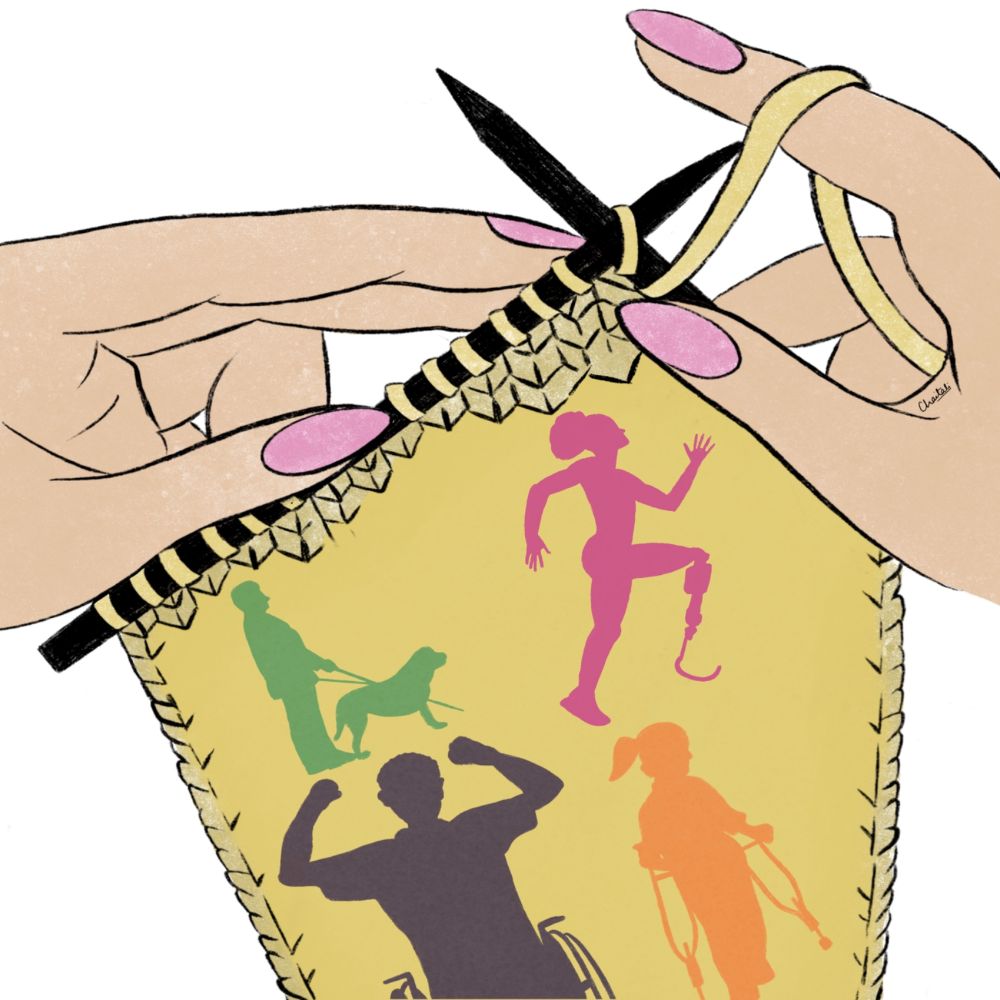
Chaitali Gupta: Knitting inclusion
Britney Heng: Between the Blues
People’s Choice Award
This was the opportunity for students of UNSW to select the work which they feel best captures the theme of Diverse Belonging. The work which attracted the most votes received the People’s Choice Award of $500, with the poll closing on Monday 1 December 2025.
Congratulations to the People’s Choice Award winner, Aiko Simanjaya for her work 'Blue Ribbon Vision':
“Vision beyond the hues” invites reflection on perception beyond perfection. This is a grayscale image representing the architecture of a Zebrafish youngling’s face. The cluster of cells which may appear as chaos and diverse from far, under a microscope give rise to a unified structure. The image has been stripped off its visual vibrancy, much like how we perceive barriers in our lives. However, beyond that inconvenience, lies a plethora of opportunity to bring structure and creativity in our own lives and society.
This is a biological sample of Zebrafish larva, stained with Hoechst, which marks nuclei in cells. The image is acquired using a laser scanning confocal microscope (Leica SP8).
The bee, placed across the figure’s mouth, can be read in two ways: as a barrier and as empowerment. It challenges how society often “speaks for” those with disabilities, while also celebrating the voice that comes from resilience and creativity. The bee, known for tireless cooperation and transformation, becomes a metaphor for diverse minds, each unique, yet essential to the hive’s survival.
The colour palette shifts from warm yellows and reds to cool blues, echoing the emotional spectrum of human experience. These transitions suggest that belonging isn’t static; it’s an evolving process of empathy, listening, and adaptation.
Through this piece, I wanted to reimagine disability not as limitation, but as an integral pattern in the honeycomb of humanity. The Hive Within invites viewers to look beyond conformity and see strength in interdependence, beauty in difference, and innovation in the ways we connect.
This work reflects my lived experience of navigating systems never designed for people like me, queer, neurodivergent, disabled, first in my family to attend university, and managing complex trauma and chronic illness. The figure in the centre, constructed from disjointed puzzle pieces, represents an identity formed at the intersection of forced fragmentation and personal strength.
The circuitry, rainbow flag, anatomical scans, and Centrelink label embedded into the body speak to how my identity is continuously mediated by institutions, from health to housing to education. On the left, a sterile and shadowed world represents exclusion, while on the right, a warmer landscape hints at futures where disability and diverse minds are valued and included.
The banner above, “Marginalisation = Segregation,” is not a metaphor. It is how exclusion operates: through inaccessible design, economic disadvantage, and systemic erasure. But through creative resistance, we reclaim space.
This piece responds to the DIIU theme of Diverse Belonging by presenting not only a visual narrative of hardship, but also a radical imagining of belonging built through visibility, intersectionality, and justice.
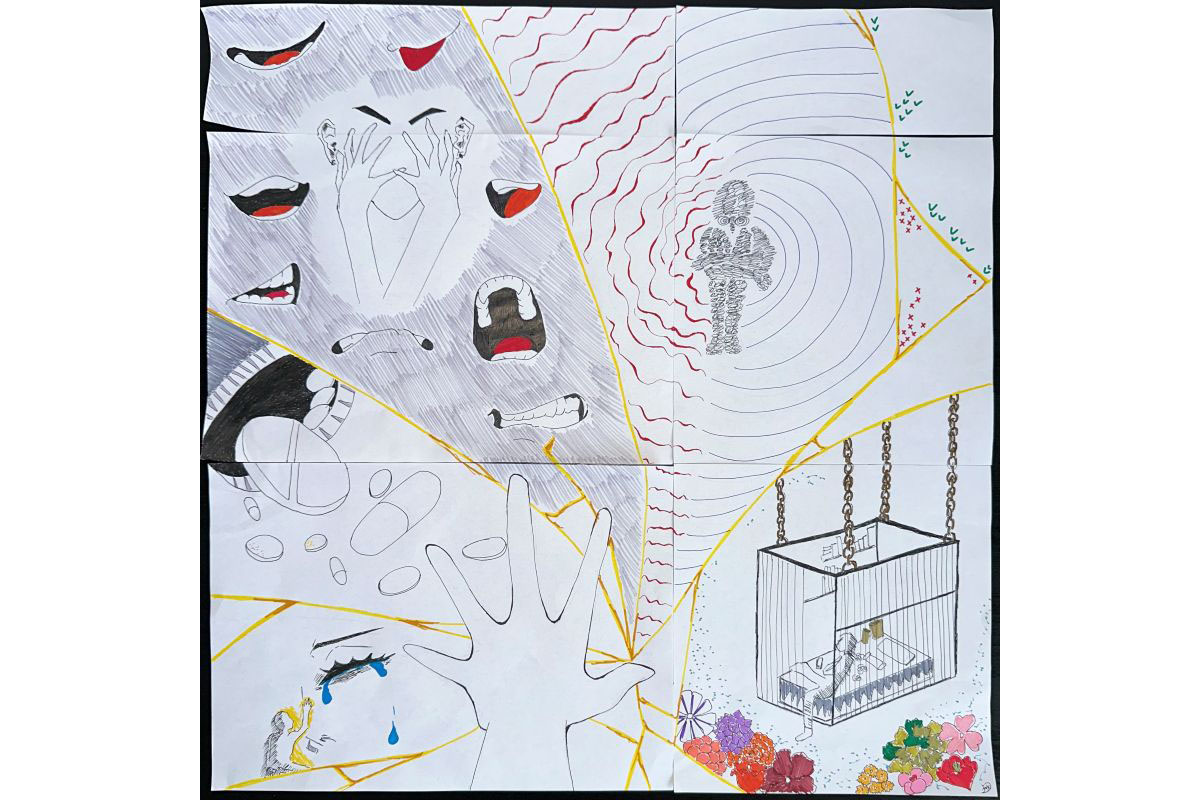
Mental illness is an invisible form of disability. Many people appear no different from anyone else, yet within, they struggle with unseen pain. The fractures of the mind do not bleed, but they can make a person quietly collapse.
I see the human spirit as a piece of glass— transparent, fragile, seemingly perfect. Beneath its surface lie delicate cracks. These fractures are not signs of destruction; when sunlight touches them, they refract into countless rays. Each crack reveals a different face of mental illness: the flicker of anxiety, the shadow of depression, the stillness of loneliness.
These cracks make us real. They remind us that pain and light can coexist—that even within suffering, light still finds a way through. Mental illness is not the end of brightness; it is the place where light enters.
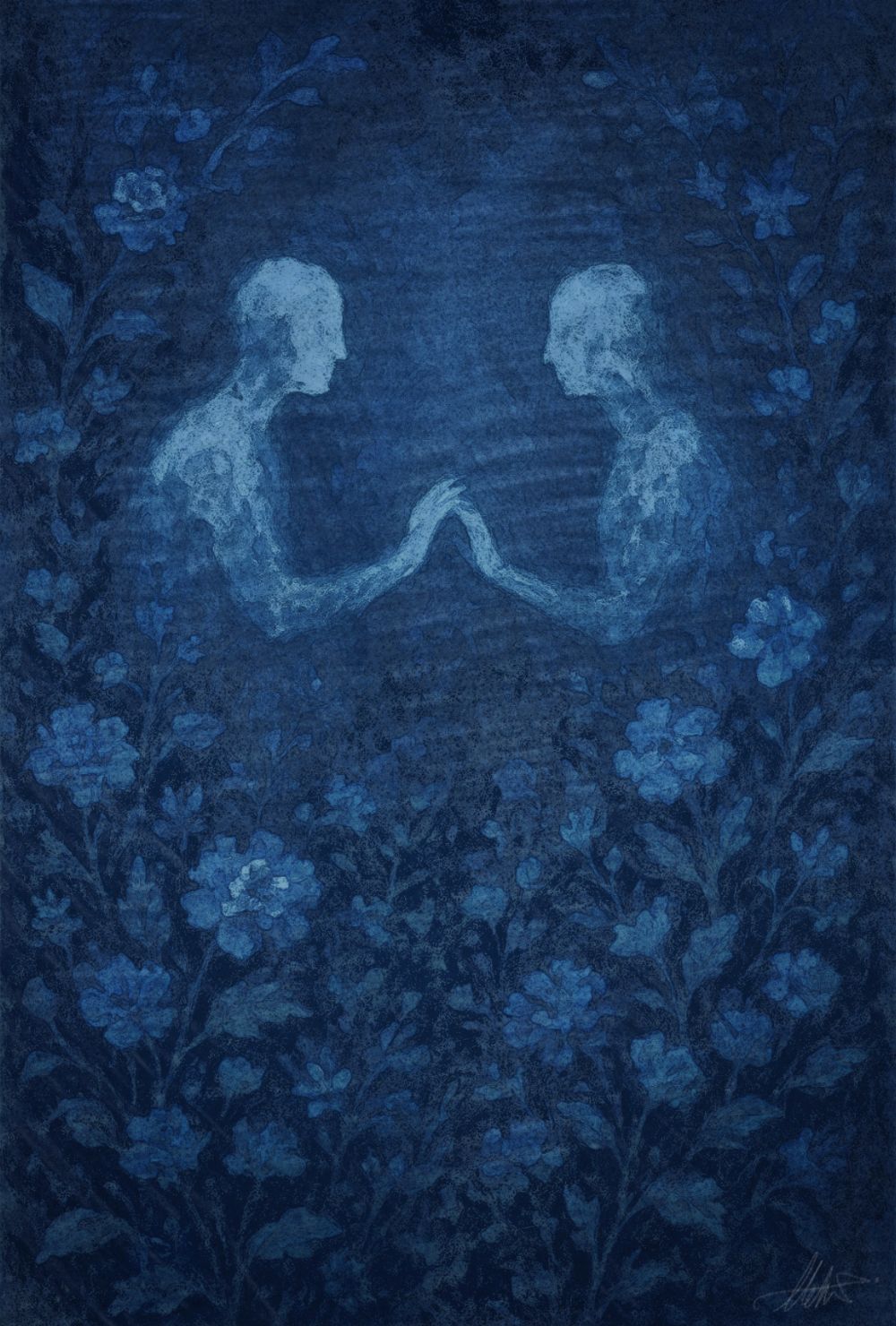
Painted in layers of watercolour and gouache, Between the Blues was born from patience — from letting the pigment breathe, wander, and choose its own direction. I sprinkled salt across the wet surface, watching it bloom into constellations — tiny fragments where water once lived. Each mark is a trace of time dissolving.
Two figures rise from the mist — pale, uncertain, reaching through the hush of blue. Their hands almost meet, a whisper apart, caught in the quiet where belonging begins. Around them, flowers unfold like echoes, and shadows fold them in — neither lost nor found, but drifting softly between.
Here, blue is both ache and comfort. It swallows and saves. It’s the ocean between hearts and the sky that holds them. The colour of stillness, of sorrow, of being seen. I painted it as I feel — half here, half fading, yet full of breath.
This piece is about how we reach across difference — not to erase what separates us, but to find the beauty in what remains. Between light and shadow, body and bloom, I found the truth of belonging: that even when we blur, we are still becoming.
Between the blues, we do not vanish — we return, softly, into each other.
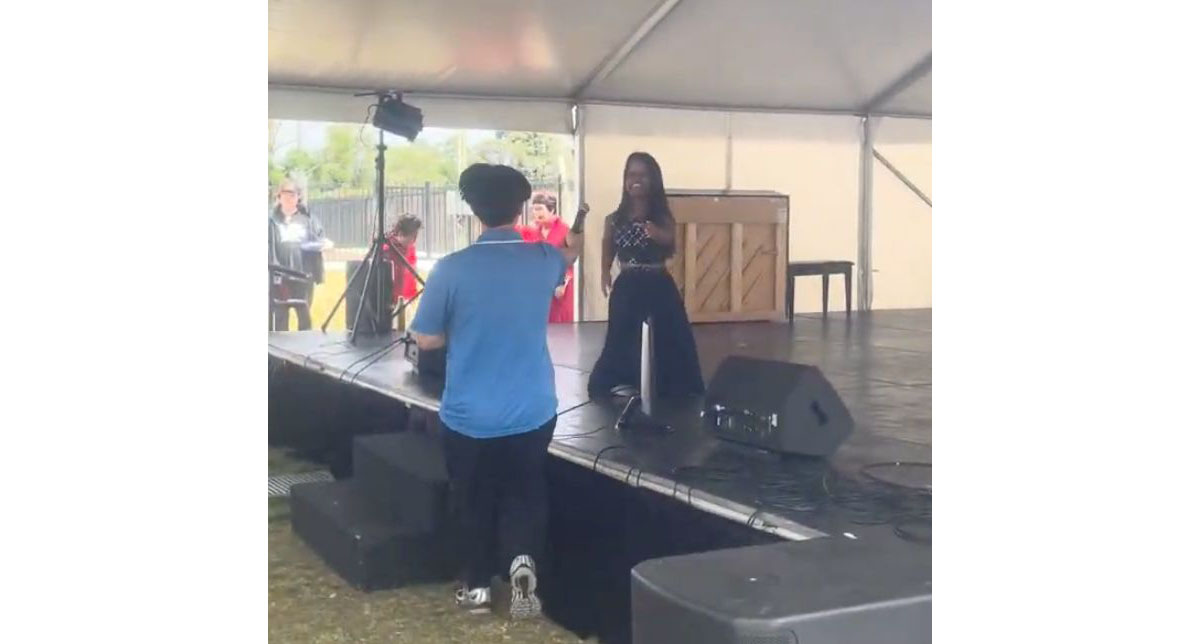
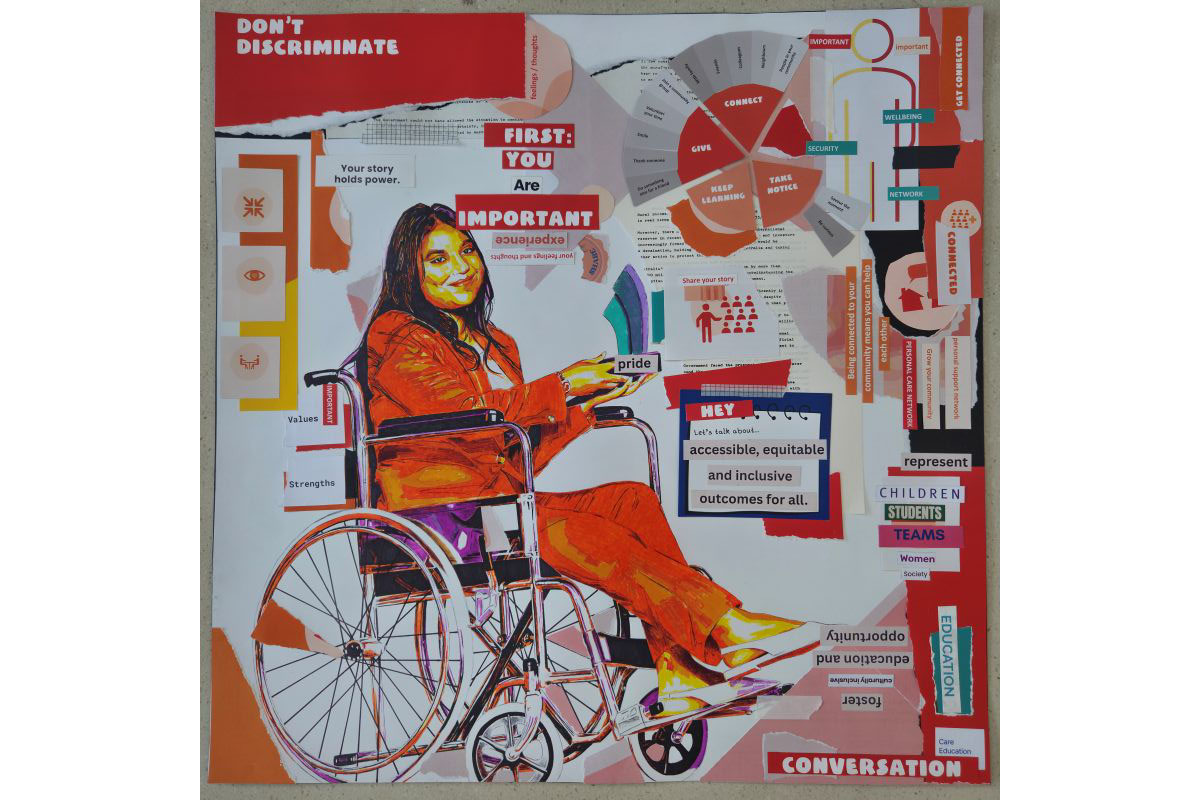
dwarf singer
My artwork was inspired by a woman I met years ago who left a deep impression on me through her courage and determination.
Through the combination of collage, typography, and expressive color, I aimed to reflect the layered experience of identity and empowerment. The vibrant orange tones convey warmth, energy, and confidence, while the fragmented text elements such as “Don’t Discriminate,” “You Are Important,” and “accessible, equitable and inclusive outcomes for all” serve as both reminders and affirmations.
This artwork is not just about one individual, it’s about how society can move toward empathy, understanding, and belonging for everyone. It invites viewers to reconsider their assumptions about ability and to recognize that every one's story holds power.
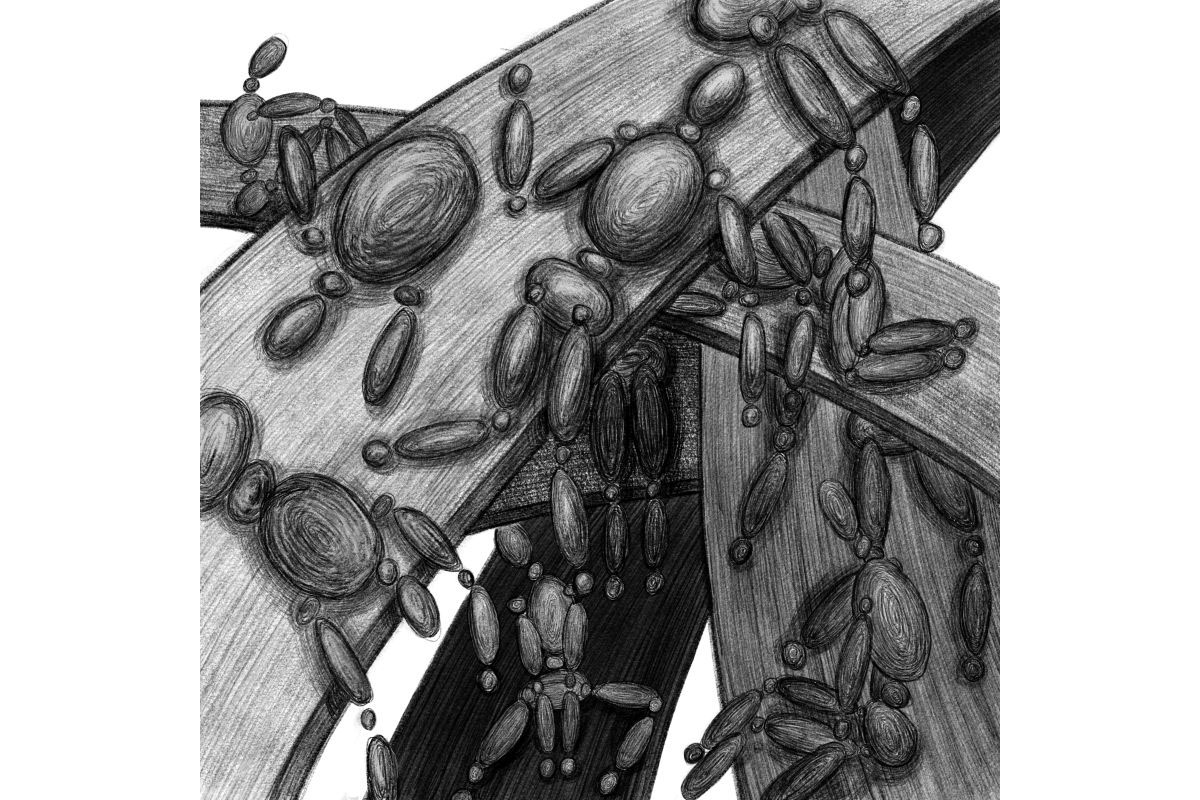
There are all kinds of people in the world, and each person has their own wonderful life. Maybe one day or for a period of time, we can be accompanied by like-minded people, and then go our separate ways. No matter who it is, we can interact with others in the most comfortable way. Everyone is a unique individual, and everyone has differences, whether it is in spirit, personality or physiology. So what? We all have the right to freely and unrestrainedly move forward on our own life paths, and we can also enjoy life with those who share the same path for a moment. What does physical disability represent? Your life path needs to be written with your own unrestrained and carefree attitude. In my work, there are various little figures in different postures on the conveyor belt. Different types of little figures represent different people. They are on the same conveyor belt, symbolizing that at this moment we can move forward together. Different postures indicate different attitudes. Anyone can show the most comfortable posture to their companions. When everyone is moving forward on the same road, the synchronization of spirit often makes people ignore the differences in physiology. Everyone should move forward happily on their own life path.
To reflect ideals of diverse belonging, I wanted to focus on the values: Creation. Inclusion. Community.
Through my digital work, ‘Utopia,’ I wanted to craft a utopian world that reflects my imagined future where all people, including students with disabilities, are able to feel welcomed in UNSW. In celebration of Disability Innovation Institute UNSW (DIIU), I wanted to incorporate a bright colour palette, including reds, greens, and yellows, to evoke a positive and welcoming environment. Furthermore, motifs of nature are significant to my utopian world-building, illustrated through symbols such as the fish, sun and clouds to create a connection between nature and unity. The buildings seen from ‘Utopia’ are illustrated to evoke a sense of unity through brightly coloured green and yellow buildings of UNSW.

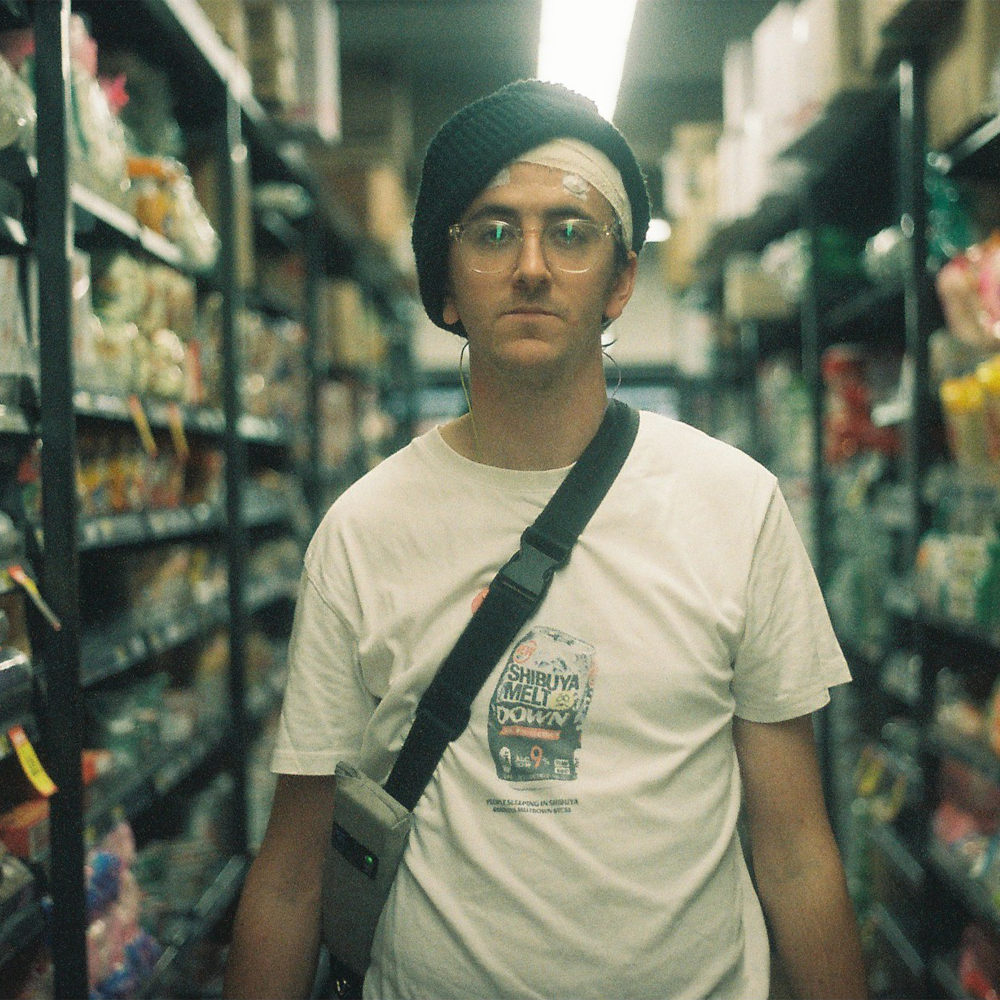
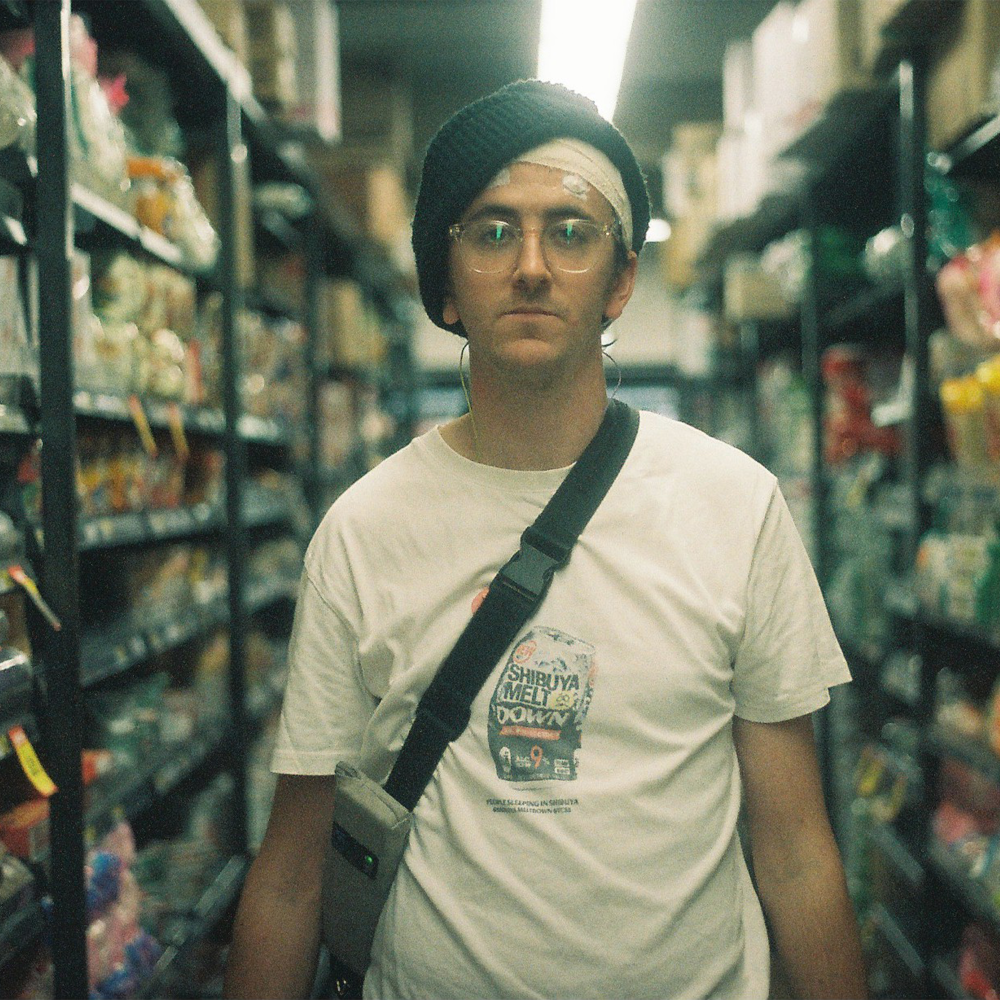
Everything's Eventually Great (EEG) started when I had a seizure from my stress-induced epilepsy before starting the first day of my second year of university. After going to the hospital, the doctors wanted to know a bit more about my brain and see why it was reacting to stress in this way. I was told I needed to undergo an AEEG (Amplitude Integrated Electroencephalography) for 5 days. This meant walking around with lots of wires hanging off my head and a bandage around my head. The AEEG would monitor my brain waves to give vital information to the neurology team at the hospital. After completing the 5 days, I was wondering what my brain waves looked like, and how we can start to understand neurodivergent brains and bodies.
I've always been interested in the sound of things that can't make noise, so after getting the results back for 6 different nodes, I copied the data of my brain waves into a music program to transcribe them into a musical composition. What you hear throughout this work is roughly 7 minutes of the sound of my brain. I believe this translation of sound can help us to understand and comprehend some of the underrepresented parts of our society.
Through this music composition I created the visual component, which is a combination of spectrograms (a visual translation of sound). Siphoning this visual data through sound, and then back into a visual aspect, the data of my brain and its functions are abstracted and a spectrum of colour can be seen. The aim of this work is to reinterpret my own understanding of my disability, while giving others the ability to connect and understand others around them.

This is the photographic work produced from my other work, Everything's Eventually Great. It is the documentation of my 5 day AEEG that I underwent in 2024, after deferring from university for health reasons (stress-induced epilepsy). This photograph works alongside the digital abstraction of my brain waves as well as the musical composition produced from the data results of this testing. I engaged with my housemate to document my daily tasks like shopping, playing music, eating food etc. to highlight the normality of my existence, even with this clunky wiring connected to my head and bandaging around my skull. This work should be shown alongside the other work, but can play as a standalone piece as well. This piece seeks to underline the inconsistency in which people with invisible disabilities deal with each day, and as I was lucky enough to be able to show my disability for others to see for 5 days, I decided to highlight this added weight to my body to hope to give insight into how other bodies function without us knowing it.
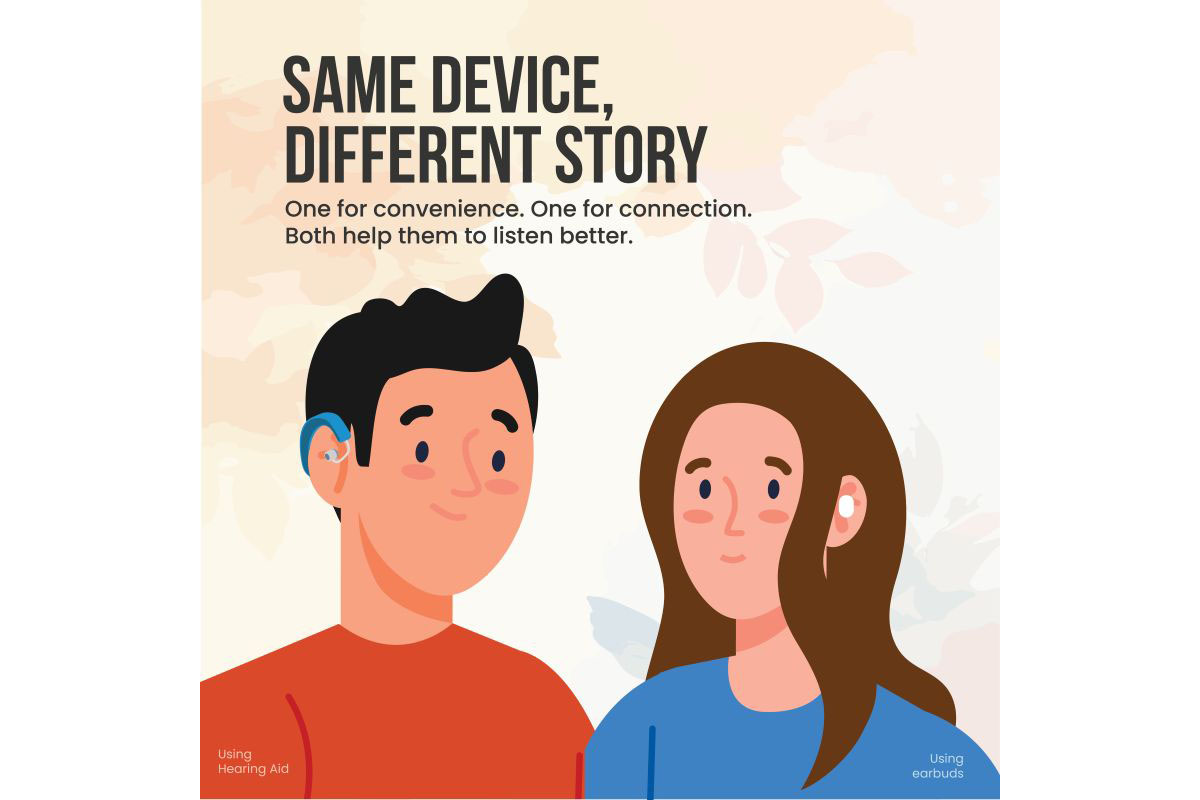
This work explores how society perceives technology differently depending on who uses it. Wireless earbuds and hearing aids are both devices designed to help people listen, yet the meanings attached to them are far from equal. Earbuds are often associated with convenience, lifestyle, and trendiness. Hearing aids, however, are frequently met with stigma, misunderstanding, or unnecessary sympathy.
Same Device, Different Story challenges this contrast by placing both devices side by side in a simple, human-centered illustration. The poster reframes assistive technology as an innovation of connection rather than a marker of limitation. For someone who is Deaf or hard of hearing, a hearing aid is not a weakness; it is a tool of empowerment, access, and belonging.
This work invites viewers to reconsider what they label as “normal” and what they label as “special” or “different.” At the core, both devices enable people to participate, communicate, and experience the world more fully. By softening these distinctions, the poster encourages empathy and understanding, reminding us that technology becomes meaningful through the lives it supports.
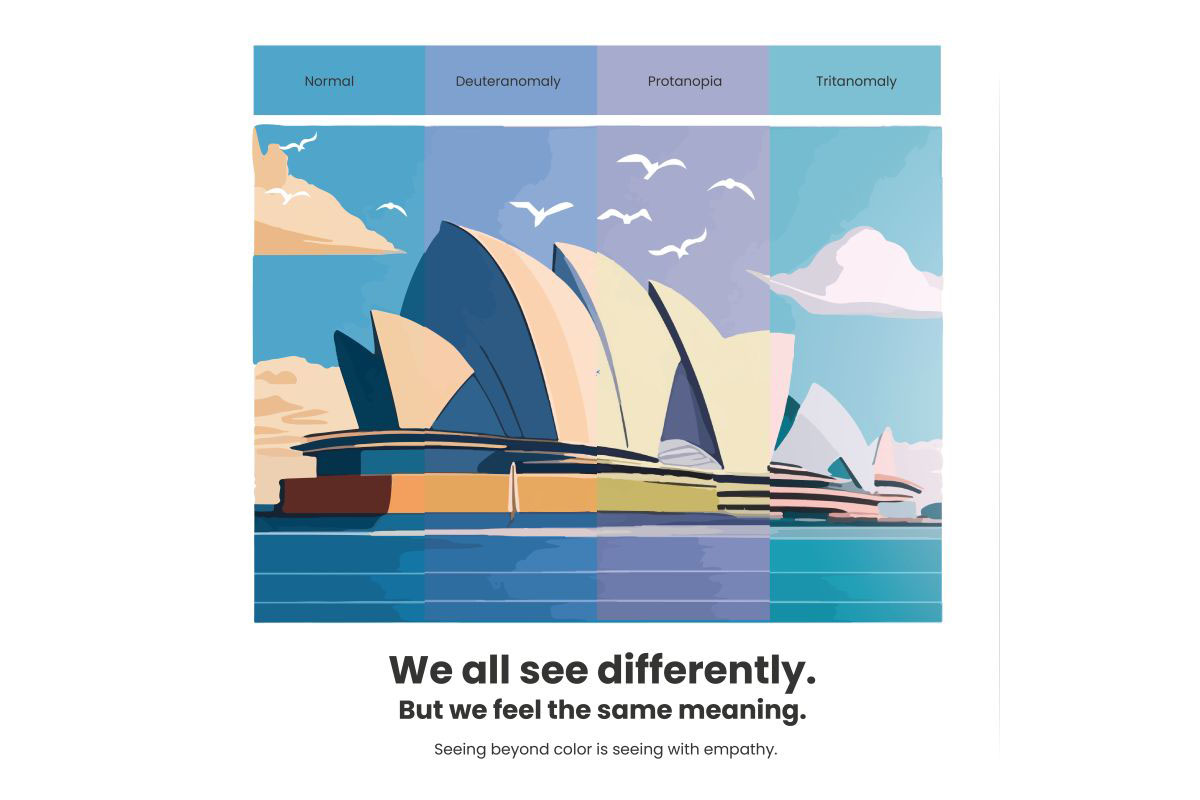
We All See Differently visualises the diverse ways people with different types of color vision perceive the same environment. Using the Sydney Opera House as a shared reference point, the poster presents four versions of the scene: normal vision, deuteranomaly, protanopia, and tritanomaly. Each panel is visually distinct, yet the subject, mood, and meaning remain recognisable.
The intention is to demonstrate that perception is never singular. People navigate the world through a range of sensory experiences shaped by biology, condition, and context. This diversity is often invisible, yet it influences how individuals understand information, interact with design, and interpret meaning.
By placing the four perspectives side by side, the poster encourages viewers to look beyond assumptions about how things “should” look. At the same time, it communicates a hopeful message: even when we see different colours, we can still share the same emotional and cultural understanding. Meaning is not lost when vision differs, it simply takes a different form.
The work highlights the importance of empathy in design and education, reminding us that accessibility begins with recognising how others see.
This piece uses shadow and metaphor to challenge assumptions about disability. At the center is a person in a wheelchair whose shadow stretches across the floor and transforms into a heroic silhouette. The contrast between the visible body and the imagined shadow represents the strengths that often go unnoticed: resilience, adaptability, creativity, problem-solving, and emotional courage.
Unseen Superpowers does not portray disability as something that needs to be “overcome.” Instead, it frames the lived experience of disabled people as a source of unique insight and capability. The superhero shadow is symbolic, not of perfection or fantasy, but of the everyday determination and inner power that disability can cultivate.
The composition also highlights how society often focuses on what a disabled person cannot do rather than acknowledging the skills, intelligence, and innovation they carry. The poster invites viewers to shift their perspective from limitation to possibility, from deficit to dignity.
Ultimately, this work celebrates disability as a form of human diversity. It calls on us to look deeper, recognise unseen strengths, and value the contributions disabled people bring to community, culture, and design.

Access Code reimagines accessibility as an invisible yet formative structure,one that shapes how people move, connect, and experience belonging. Drawing from the logic of Braille, its grids, spacing, and tactile rhythm,the work translates these principles into a digital landscape composed of blue nodes, diffused halos, and scattered human silhouettes. These circular nodes become “access points,” symbolising how diverse bodies, senses, and pathways intersect within the same system.
Rather than depicting disability through symbolic labels, the work frames accessibility as a distributed network. Each node carries its own weight, density, and presence, reflecting the varied ways individuals navigate, sense, and participate in the world. The soft halos surrounding these nodes evoke sensory dimensions beyond vision, inviting viewers to imagine perception as fluid, layered, and interdependent. The tiny figures—visible only upon close inspection—suggest how lived experiences often fade into large systems unless space is intentionally designed for them.
Access and belonging do not occur naturally, they must be designed, constructed, and collectively created.

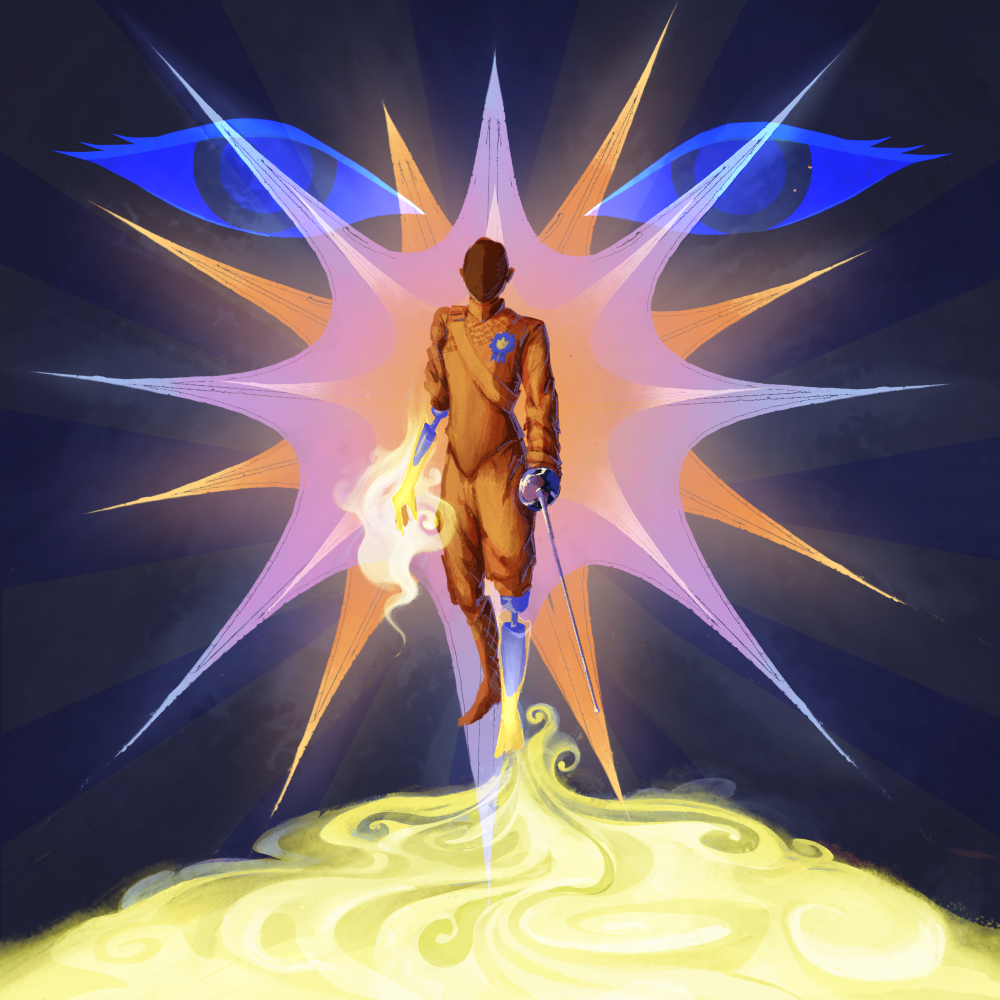
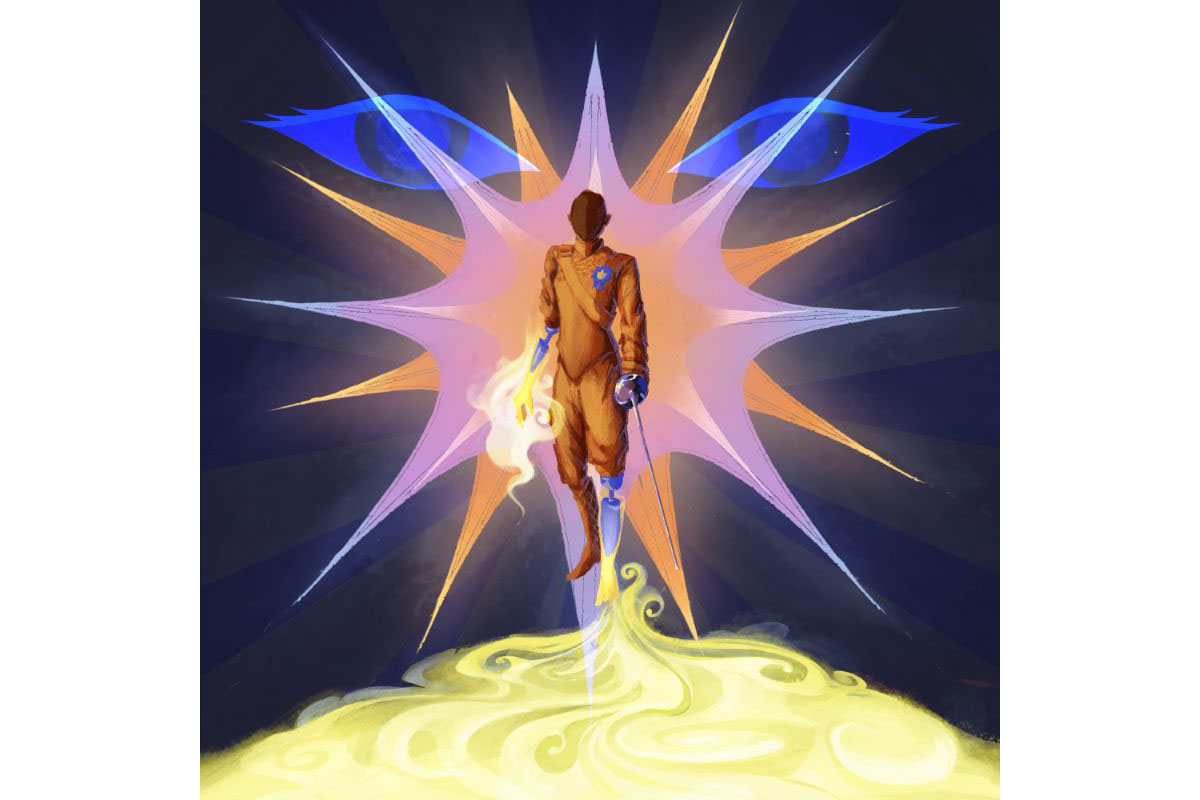
The world narrows to a hush within the fencing suit. Movement is restrained, sight is veiled, and touch drifts just out of reach. Her sword stretches from her body like a second limb, her mask a shield woven into her identity rather than a barrier. She steps into a new world of possibility, crafting her own dances, her own language of strength. Her disability is no boundary as she moves with confidence, power, and triumphant.
To breathe in complete fluidity is an intensely cathartic experience, particularly as a neurodiverse person. And yet, as complicated and overwhelming as it can be, the immense liberation to exist undistorted is always worth the turmoil. I wanted to capture the carnival one breath can enable in my piece, and the beauty that is possible if we create spaces for all to thrive.
